Research Output

Publications

Peer-reviewed journal articles by DeepMathAI research group members — each with a graphical abstract and summary.

6
Published
3
Accepted
9
Total

Published Articles

PublishedOptimization2026

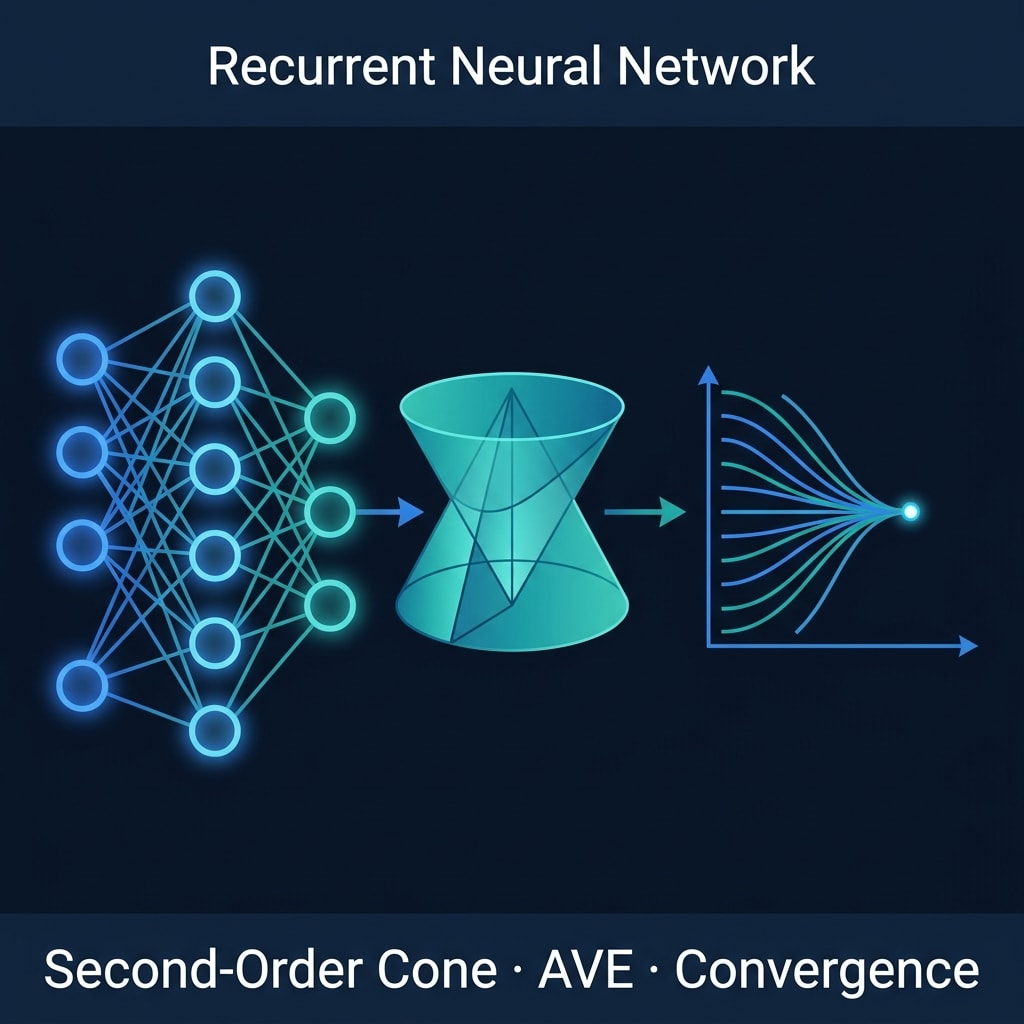
A Projection Recurrent Neural Network Method for Solving Absolute Value Equations Associated with Second-Order Cones

Wangkeeree, R., Wangkeeree, R., Nazemi, A., Belay, Y.A., & Ungchittrakool, K.

This paper proposes a projection recurrent neural network for solving absolute value equations (AVE) constrained within second-order cones. The network is proven to be globally convergent to the exact solution using Lyapunov stability theory, offering a continuous-time dynamical approach that outperforms classical iterative solvers.

Journal of Computational and Applied Mathematics (Elsevier)
Vol. 485, 15 October 2026, 117567
DOI: 10.1016/j.cam.2026.117567
PublishedOptimization2026

A Projection Neural Network With Delays and Optimization Approaches for Solving Absolute Value Equations

Prathom, K., Wangkeeree, R., Belay, Y.A., & Hongsri, A.

A novel projection neural network incorporating time delays is developed to solve absolute value equations. The delay dynamics capture real-world computational latencies, and the model is combined with optimization techniques to ensure global stability. Experiments demonstrate superior convergence speed compared to delay-free counterparts.

IEEE Access
Vol. 14, pp. 50141–50155, March 2026
DOI: 10.1109/ACCESS.2026.3679347
PublishedApplied Math2026

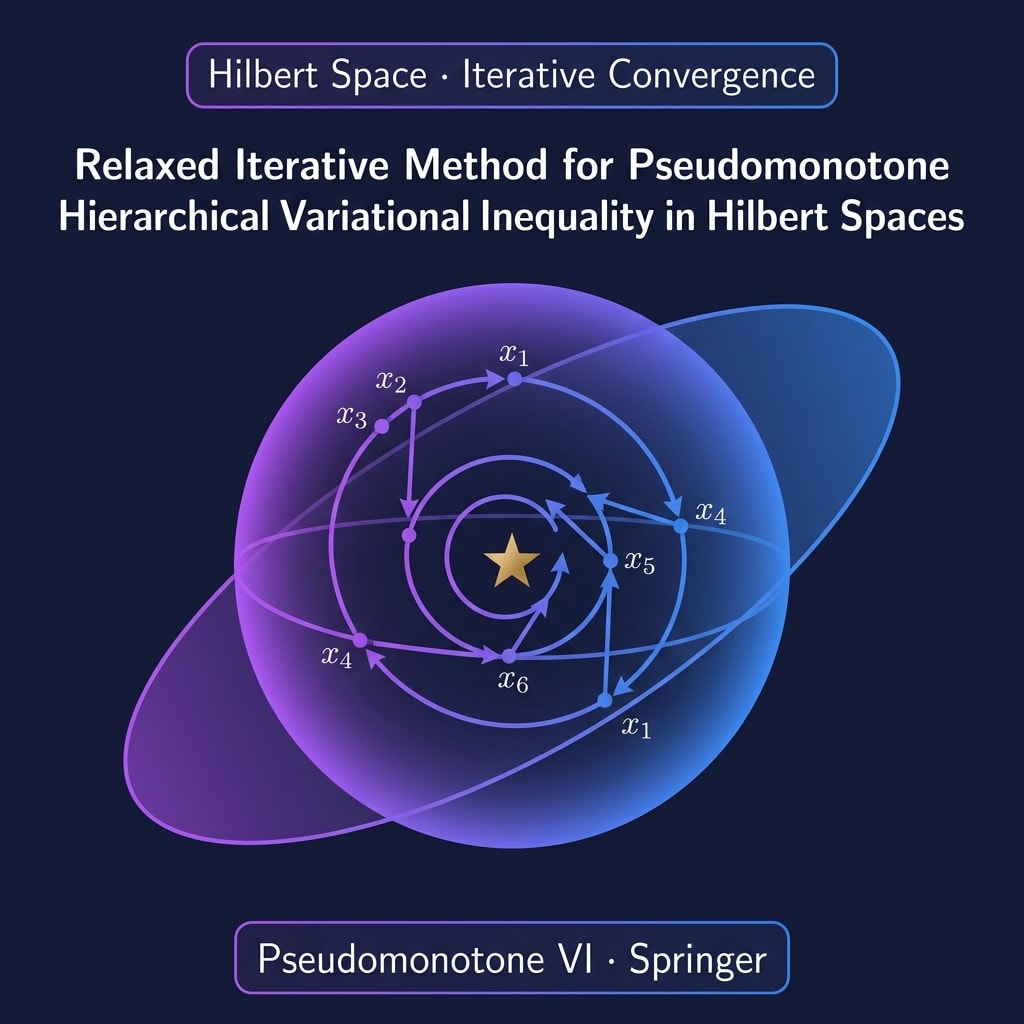
A relaxed iterative method for approximating solutions of pseudomonotone hierarchical variational inequality problems in Hilbert spaces

Gebremeskel, K.G., Tewele, T.G., Wangkeeree, R., Belay, Y.A., & Meche, T.H.

This work introduces a relaxed iterative algorithm for solving hierarchical variational inequality problems in infinite-dimensional Hilbert spaces under pseudomonotonicity assumptions. Weak and strong convergence theorems are rigorously established, with numerical experiments validating the theoretical results.

The Journal of Analysis (Springer)
08 May 2026
DOI: 10.1007/s41478-026-01096-8
PublishedMedical AI2026

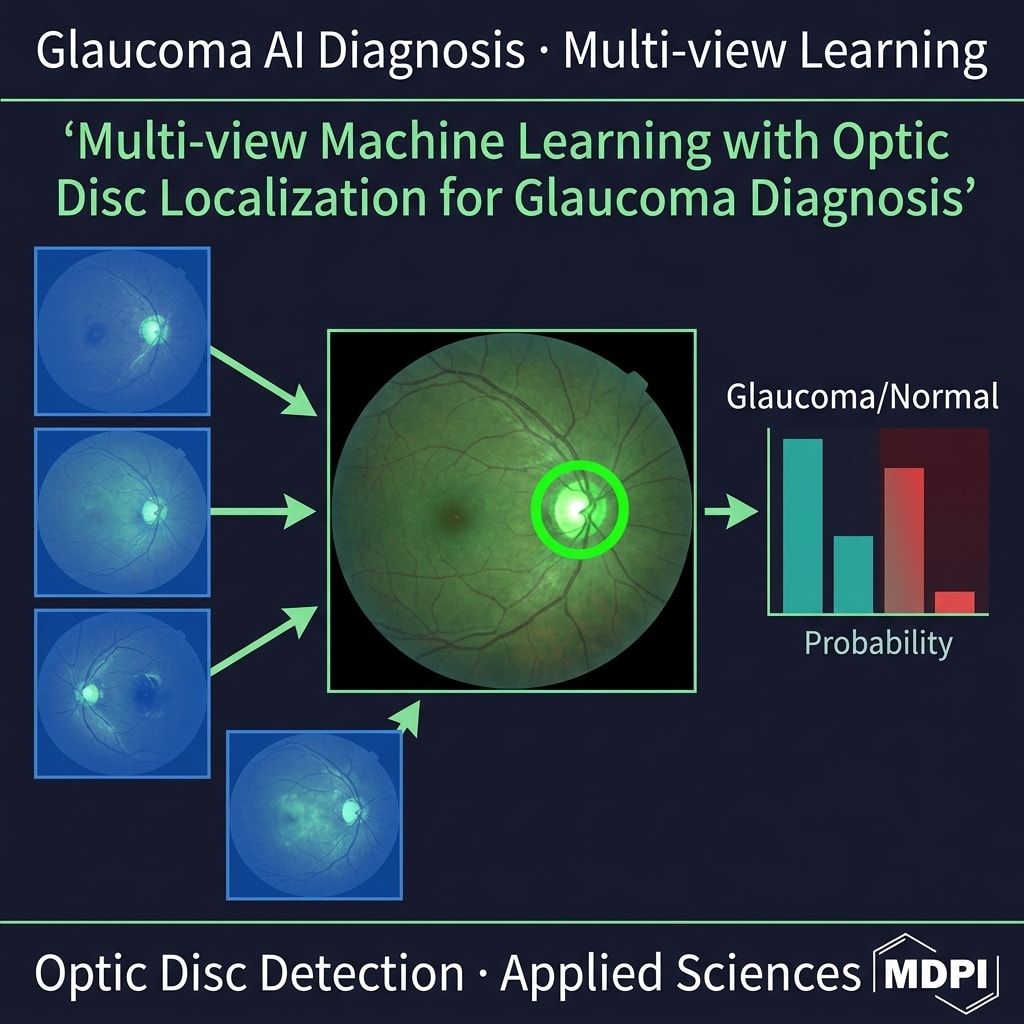
Multi-view machine learning with an optic disc localization for glaucoma diagnosis

Siying, P., Muangphara, T., Photun, A., Suppalap, S., Klinsuwan, T., Phruancharoen, C., Treeyawedkul, S., Chira-adisai, T., Supattanawong, Y., & Wangkeeree, R.

An AI-powered glaucoma screening system that combines optic disc localization with multi-view machine learning. The model fuses features from multiple retinal fundus image perspectives to achieve robust classification of glaucoma vs. normal cases, offering a clinically applicable diagnostic tool validated on real patient data.

Applied Sciences (MDPI)
Vol. 16, Issue 7, 3158
DOI: 10.3390/app16073158
PublishedApplied Math2025

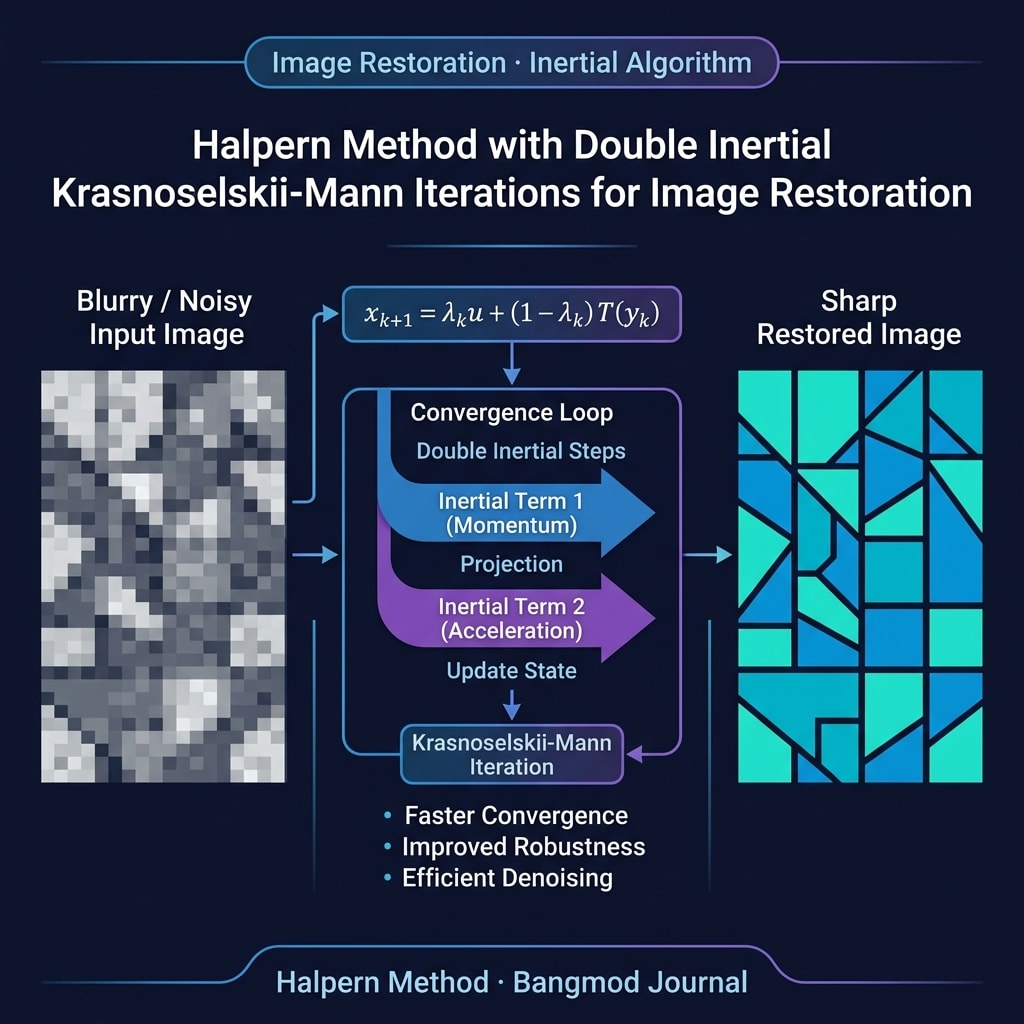
A Halpern Method for Solving Perturbed Double Inertial Krasnoselskii-Mann Iterations with Applications to Image Restoration Problems

Rattanaporn Wangkeeree, Rabian Wangkeeree, Yirga Abebe Belay, Kasamsuk Ungchittrakool, Purit Thammasiri, and Pakkaporn Preechasilp

A Halpern-type iterative scheme enhanced with double inertial terms and perturbation tolerance is proposed for finding fixed points in Banach spaces. The method achieves accelerated convergence and is applied successfully to signal denoising and image restoration benchmarks, demonstrating practical utility alongside strong theoretical guarantees.

Bangmod International Journal of Mathematical & Computational Science
Vol. 11 (2025)
View Article
PublishedApplied Math2026

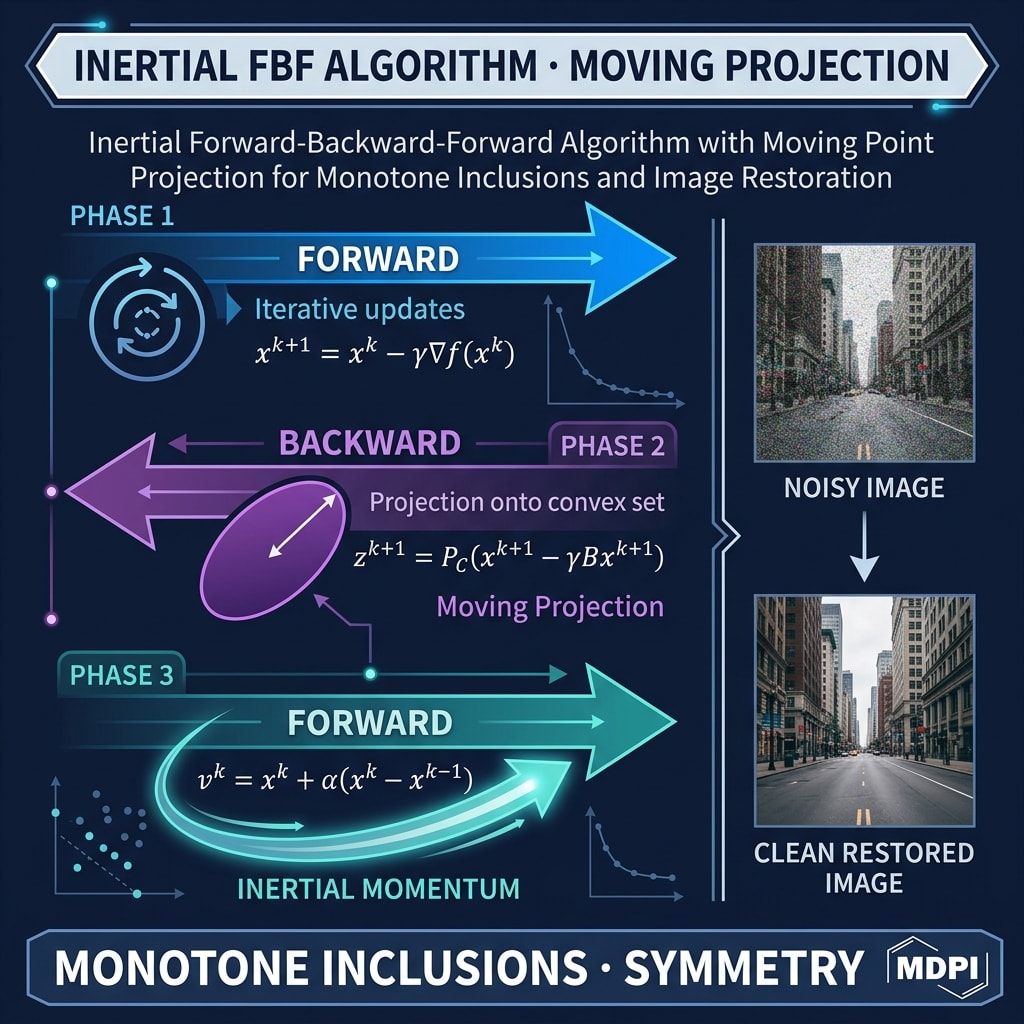
Inertial Forward–Backward–Forward Algorithm with Moving Point Projection for Monotone Inclusions and Image Restoration

Thammasiri, P., Berinde, V., Plubtieng, S., Ungchittrakool, K., & Wangkeeree, R.

A three-step inertial Forward–Backward–Forward (FBF) splitting algorithm with a moving projection operator is introduced for solving monotone inclusion problems. The inertial extrapolation significantly accelerates convergence. Applications to image restoration under various noise models confirm the method's competitive performance against state-of-the-art algorithms.

Symmetry (MDPI)
Vol. 18, Issue 5, 782
DOI: 10.3390/sym18050782

Accepted / In Press

AcceptedApplied Math2026

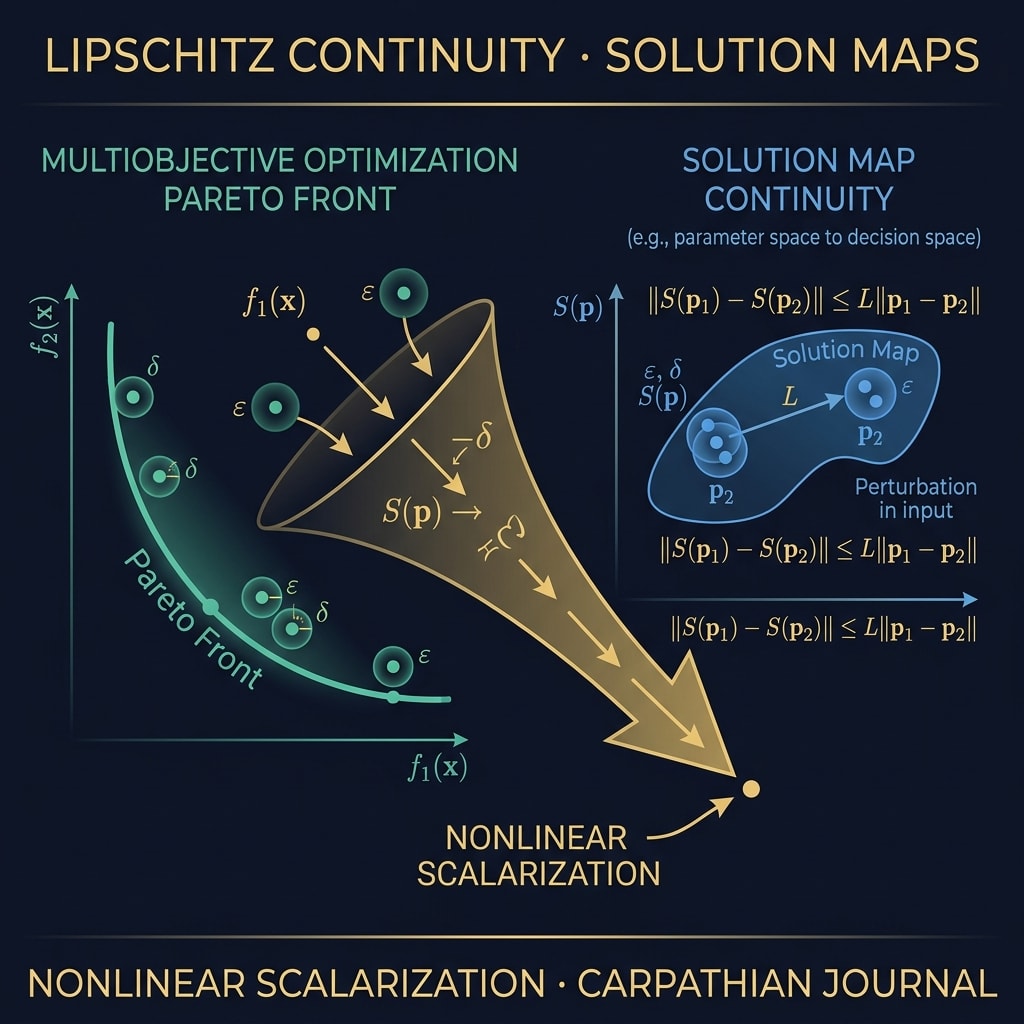
Continuity and Lipschitz Properties of Approximate Weak Solution Maps via Nonlinear Scalarization

Preechasilp, P., & Wangkeeree, R.

This paper investigates the stability of solution maps for approximate weak vector optimization problems. Using a nonlinear scalarization technique, Hölder continuity and Lipschitz properties of the solution maps are derived under parametric perturbations, contributing to the theoretical foundations of robust optimization.

Carpathian Journal of Mathematics
Issue 4/2026 — Special Issue: AMC-2025
AcceptedOptimization2026

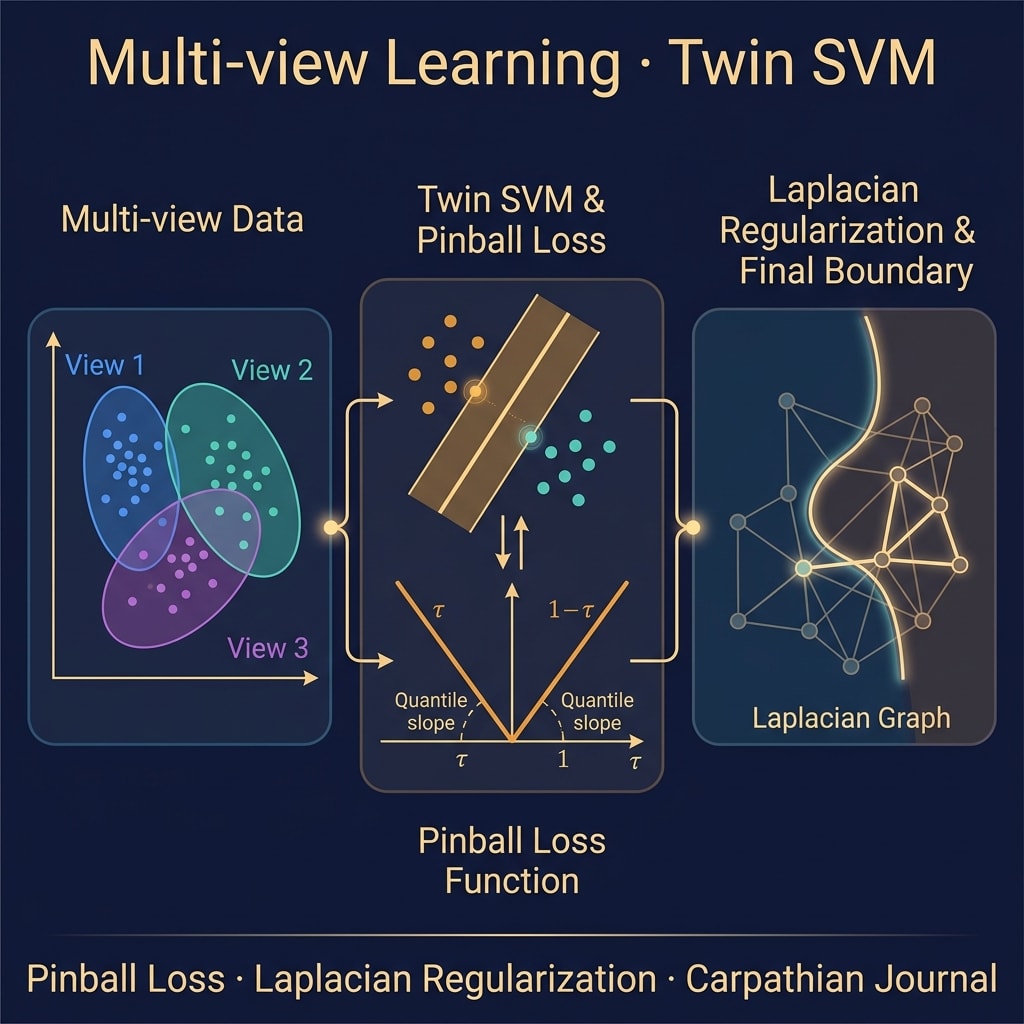
Multi-view Laplacian twin support vector machine with pinball loss function

Damminsed, V., & Wangkeeree, R.

This paper presents a Multi-view Laplacian Twin SVM that integrates pinball loss for improved robustness to noise and outliers. The Laplacian graph regularization captures geometric structure across multiple data views, while the twin hyperplane formulation reduces computational complexity. The model achieves state-of-the-art classification accuracy on benchmark datasets.

Carpathian Journal of Mathematics
View Article
AcceptedOptimization2026

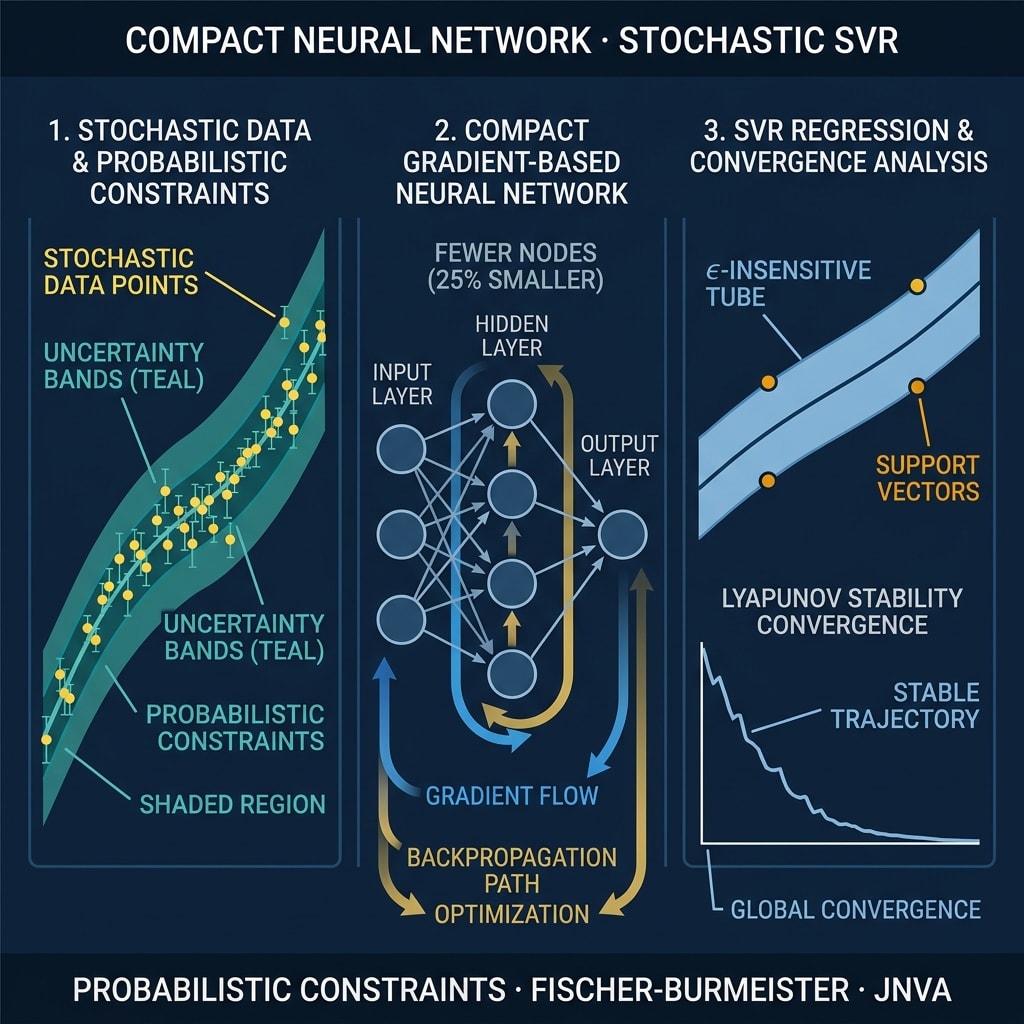
Compact Gradient-Based Neural Network for Stochastic Support Vector Regression with Probabilistic Constraints

Tananimit, N., Grace, T., Belay, Y. A., & Wangkeeree, R.

A compact gradient-based neural network is designed to solve stochastic support vector regression (SSVR) with probabilistic constraints. Using a smoothed Fischer–Burmeister function, the nonsmooth KKT conditions are reformulated, yielding a numerically stable gradient flow. The proposed architecture achieves a 25% reduction in network complexity with faster training times while outperforming standard SVR implementations on UCI benchmarks.

Journal of Nonlinear and Variational Analysis
DOI: JNVA-2026042701